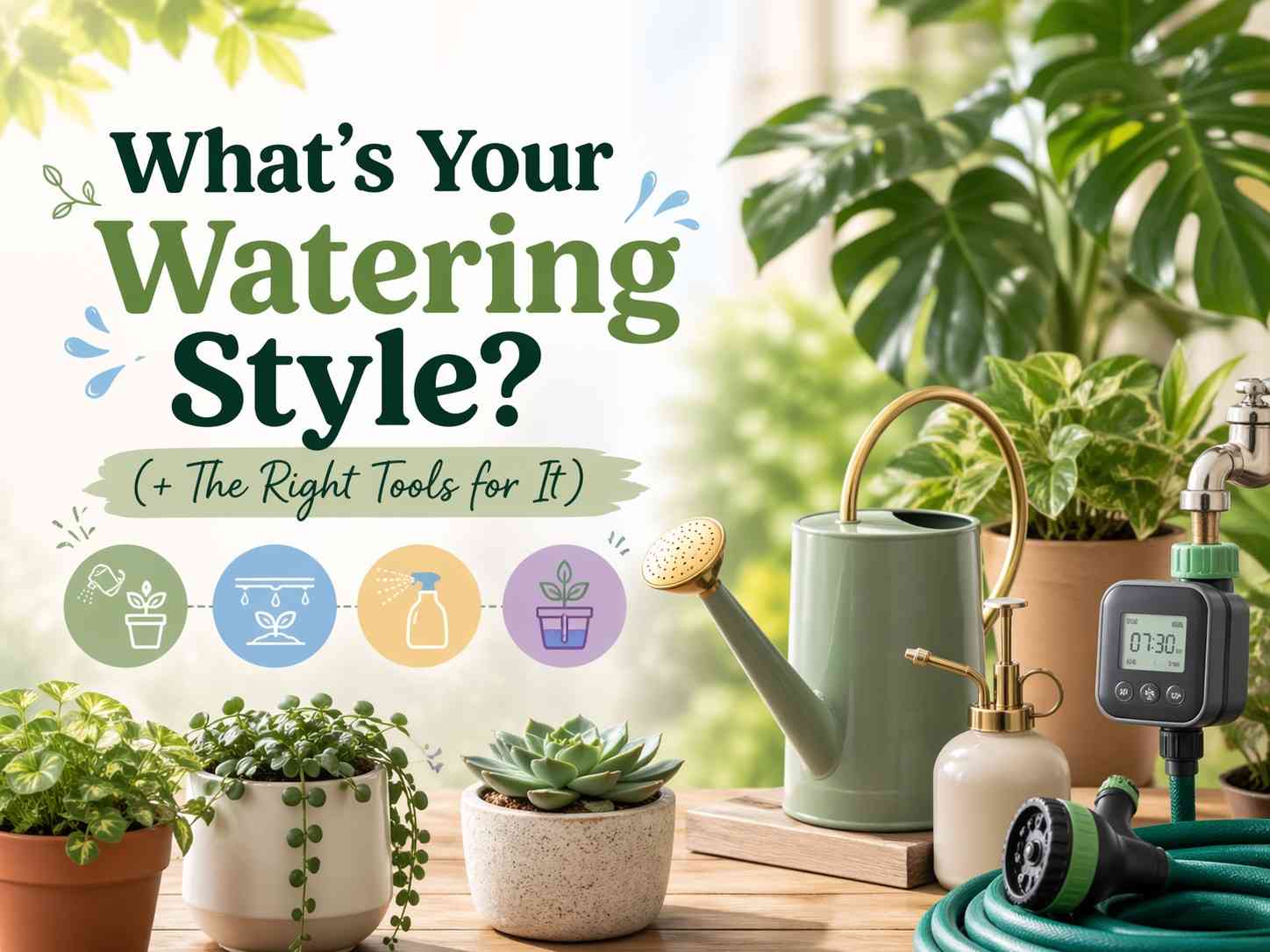
What’s Your Watering Style? (+ The Right Tools for It)
Seven quick questions. Walk away knowing exactly which watering system fits your garden — and which ones are just wasted money.
Most garden watering problems aren’t about how much water you’re using. They’re about how you’re delivering it. The right tool for a container gardener on a balcony looks nothing like what a raised-bed grower needs. And neither of those is what someone managing a large in-ground garden actually reaches for every week.
Drip irrigation, soaker hoses, adjustable sprinklers, long-spout watering cans, garden hoses with smart timers — each one fits a specific type of garden and a specific type of gardener. Buy the wrong one and it collects dust in the shed by July.
This quiz figures out your watering style — how you garden, how much time you want to spend, what you’re growing — then tells you exactly which tools are worth buying, with links to find them. No filler, no “just get a hose nozzle” advice that applies to everyone and no one.
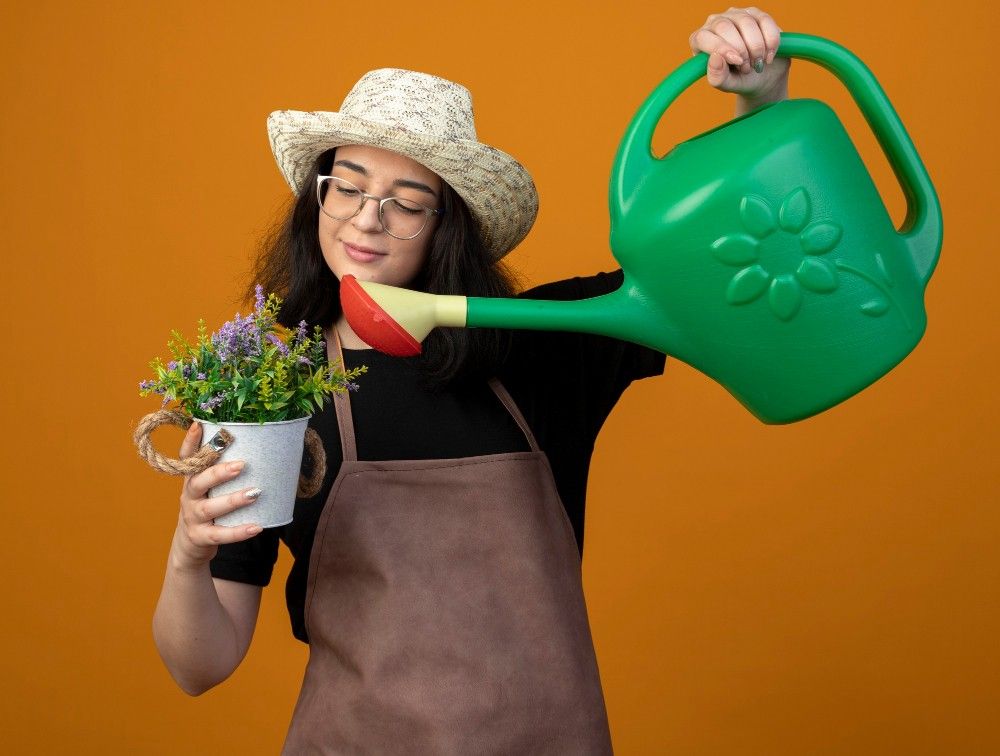
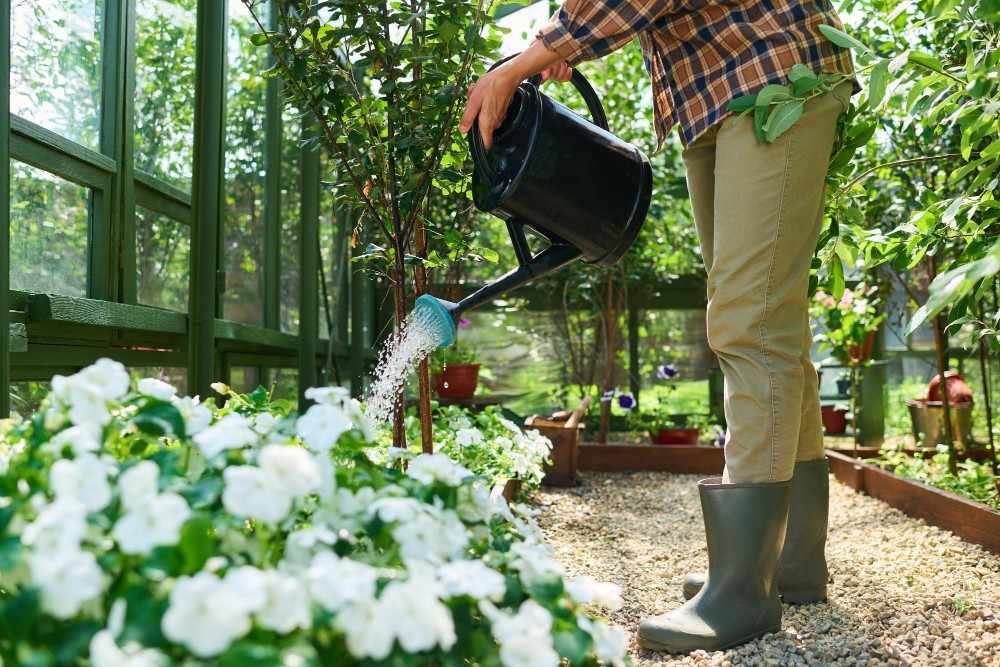
The right watering tool depends entirely on your garden setup and how much time you want to spend — not what the packaging says is “best.”
The 6 Watering Style Profiles
Each profile below reflects a real type of gardener and the watering tools that actually make sense for them. These aren’t suggestions — they’re the tools people use every week once they find the right match for how they garden.
The Careful Hand Waterer
You’re growing in containers or small beds and you pay close attention to each plant. You notice when leaves droop, when soil pulls from the pot edge, when things need a drink versus when they don’t. You don’t want a set-and-forget system — you want precision tools that let you water exactly as much as needed, exactly where it’s needed.
The Hose & Nozzle Gardener
You have a medium garden — maybe a few beds, some pots, a bit of lawn to take care of. You don’t want to set up irrigation systems. You’re happy to walk through with a hose every other day. The key is getting a hose that doesn’t kink, a nozzle that gives you actual control, and a storage solution so it doesn’t become a snake on your lawn.
The Drip Irrigation Grower
You’re growing vegetables seriously — tomatoes, squash, peppers, beans — and you know that wet foliage means disease. You’ve read enough to know drip irrigation saves water, keeps plants healthier, and frees you from daily hose rounds. You’re ready to set it up properly. Once it’s in, you won’t look back.
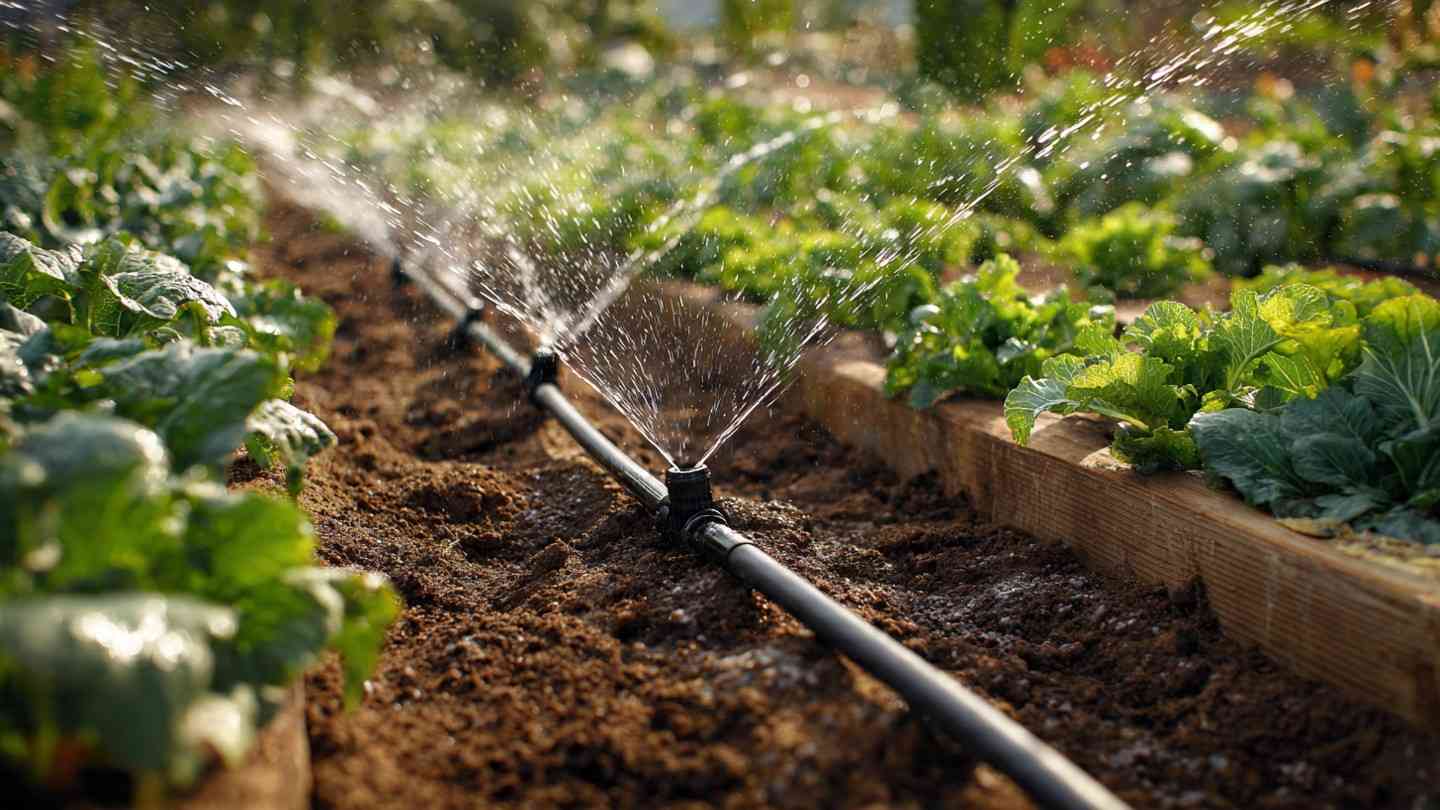
Drip irrigation delivers water straight to roots — which means less disease, less waste, and less time standing with a hose.
The Soaker Hose Gardener
You like the idea of irrigation but don’t want to spend a Saturday installing emitters and tubing. Soaker hoses are the middle ground — lay them once along your bed edges, connect to the tap, and you’re done. They deliver water slowly along the entire length, soaking deeply into the root zone. Not as precise as drip, but far more effective than a hose nozzle and far simpler to set up.
The Smart Timer & Sprinkler Manager
You travel. You get busy. You forget. You want a watering system that runs reliably without you. Sprinklers and smart timers handle lawn, ground-cover beds, and mixed spaces well — especially when paired with a rain sensor so you’re not watering in a downpour. The goal is a system that runs in the background and only needs attention when something breaks.
The Full-System Builder
You have multiple zones, a timer system already running, and the habit of checking soil moisture rather than guessing. You’re not starting from scratch — you’re upgrading. A better timer with more zones, a soil moisture sensor that reports to your phone, a proper water filter to protect your drip emitters. The tools at this stage are about precision and longevity.
More gardening guides & quizzes
Find more guides, tool recommendations, and quizzes on the TWC Gardening blog.
Common questions about garden watering
Drip irrigation wins on precision and efficiency. You can place emitters exactly where roots are, adjust flow per plant, and scale the system as you add beds. Soaker hoses win on simplicity — unroll, connect, done. For raised beds with uniform planting, soaker hoses work well. For beds with a mix of plants at different spacings, drip gives you more control. If you’re running one bed and want zero setup time, go soaker. If you’re running two or more beds and plan to expand, set up drip once and you’ll never go back.
Raised beds dry out faster than in-ground soil because they drain freely and have more surface area exposed to air. In hot weather, raised beds may need watering every 1–2 days. In-ground beds hold moisture longer and typically need water every 2–4 days depending on soil type and temperature. The reliable answer for both is to check before watering — a moisture meter or a finger pushed 2 inches into the soil tells you more than any schedule. Most over-watering problems come from sticking to a calendar rather than reading the soil.
Early morning is consistently the best time — typically between 5am and 9am. Water has time to soak into the root zone before temperatures rise, and any moisture that reaches the foliage dries before nightfall. Evening watering works but leaves foliage wet overnight, which increases disease risk significantly for vegetables. Midday watering wastes water through evaporation and stresses plants with the rapid temperature difference. If you’re using drip or soaker irrigation, set your timer to fire at dawn and let the system handle it.
For one or two containers, probably not. For anything larger — even a single raised bed — a basic hose timer is one of the most useful things you can buy for under $30. It removes the mental load of remembering to water, waters at the optimal time even when you’re busy or travelling, and prevents the over- and under-watering cycles that come from irregular manual schedules. The step from “no timer” to “basic mechanical timer” is bigger than the step from “basic timer” to “smart Wi-Fi timer.” Start there.
Both problems look similar on the surface — wilting, yellowing leaves, poor growth. The difference is in the soil: underwatered soil is bone dry an inch below the surface; overwatered soil is consistently soggy and often smells musty. Overwatering is more common and more dangerous — it suffocates roots and encourages rot. Before watering, push a finger 2 inches into the soil. If it’s still damp, wait. If it’s dry, water. A soil moisture meter automates this entirely and is especially useful for containers where it’s hard to judge by sight.
![What Gardening Tools Do You Actually Need? [Take the Quiz]](https://twcgardening.com/wp-content/uploads/2026/04/what-tool1-150x150.jpg "What’s Your Watering Style? (+ The Right Tools)")