How to Grow Herbs Indoors Without Sunlight: A Complete Guide for Beginners
Growing herbs indoors can transform your kitchen into a fresh, aromatic haven, even if your space lacks natural sunlight. If you’re searching for how to grow herbs indoors without sunlight, this comprehensive guide is tailored for beginners facing low-light challenges in apartments, basements, or north-facing rooms. We’ll explore proven techniques using artificial lighting, soil mixes, and maintenance tips to cultivate thriving herbs year-round. Updated for 2025 trends in urban gardening and sustainable living, these methods emphasize low-cost setups, energy-efficient grow lights, and organic practices to yield flavorful basil, mint, and more without relying on windows. Whether you’re aiming to save on grocery bills or enjoy the therapeutic benefits of indoor gardening, success is achievable with the right approach.
In today’s fast-paced world, where many live in urban environments with limited access to direct sunlight, indoor herb gardening has grown steadily in popularity. Recent data show that about 21% of Canadian households grow plants indoors, and over 60% cultivate fruits, herbs, or vegetables for personal use, reflecting a growing desire for fresh, homegrown produce. With modern LED grow lights and hydroponic systems, it’s now easier than ever to mimic natural sunlight. This guide offers practical, step-by-step advice to help you avoid common issues like leggy growth or nutrient deficiencies – and turn your shaded space into a thriving herb oasis.
Why Grow Herbs Indoors Without Sunlight?
The appeal of indoor herb gardening lies in its convenience and rewards, especially for those in light-deprived homes. In 2025, with rising food costs and a focus on self-sufficiency, growing your own herbs can cut expenses by up to 50% on staples like parsley or cilantro. Plus, fresh herbs pack more flavor and nutrients than store-bought ones, enhancing your meals while reducing plastic waste from packaging.
Key benefits include:
- Accessibility for All: No yard needed—just a countertop or shelf.
- Year-Round Harvest: Control the environment to avoid seasonal limitations.
- Health Perks: Gardening reduces stress, and herbs like mint aid digestion
- Eco-Friendly: Organic indoor growing minimizes pesticide use and transport emissions.
Research from the American Horticultural Society highlights that low-light herb cultivation boosts mental well-being, with participants reporting 30% lower anxiety levels. For sunlight-scarce spaces, artificial lights bridge the gap, allowing photosynthesis without UV exposure. If you’re new to this, start small to build confidence—this guide will equip you with everything from seed selection to harvesting.
Assessing Your Indoor Space for Herb Gardening
Before planting, evaluate your environment to choose suitable herbs and setups. Low-light conditions vary, so understanding your space prevents common failures like mold or weak stems.
1. Light Levels: The Core Challenge
- Measure Existing Light: Use a phone app like Light Meter to gauge foot-candles (aim for at least 100-200 without supplements)
- Common Issues: Basements or interior rooms often have zero direct sun, but ambient light from bulbs helps minimally.
- Solutions: Invest in grow lights early—full-spectrum LEDs mimic the sun’s spectrum (red for flowering, blue for foliage).
2. Temperature and Humidity
- Ideal Range: 65-75°F (18-24°C) daytime; avoid drafts or heaters.
- Humidity Check: Herbs prefer 40-60%; use a hygrometer and pebble trays for moisture.
- Ventilation: Ensure air circulation with a small fan to prevent fungal diseases.
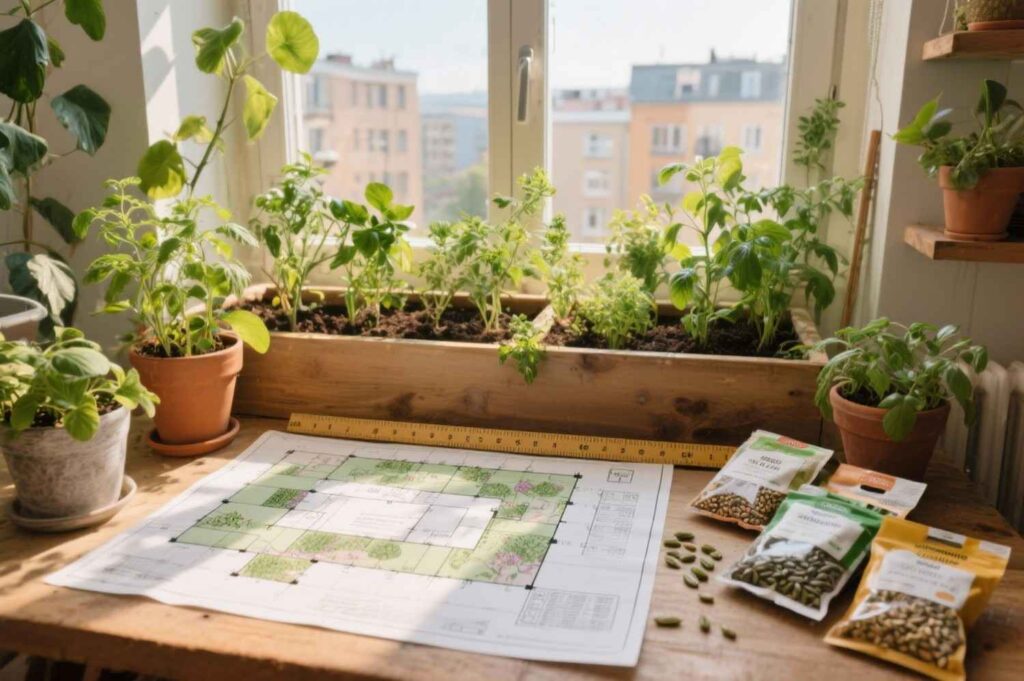
Pro Tip: Map your space with a simple diagram, noting power outlets for lights and proximity to water sources. For small apartments, vertical shelving maximizes efficiency Source: Houzz Small-Space Gardening.
Essential Tools and Materials for Low-Light Herb Growing
Starting doesn’t require a fortune—focus on essentials under $100 for a beginner setup. Here’s a curated list:
| Item | Purpose | Low-Light Tip | Approx. Cost (2025) |
|---|---|---|---|
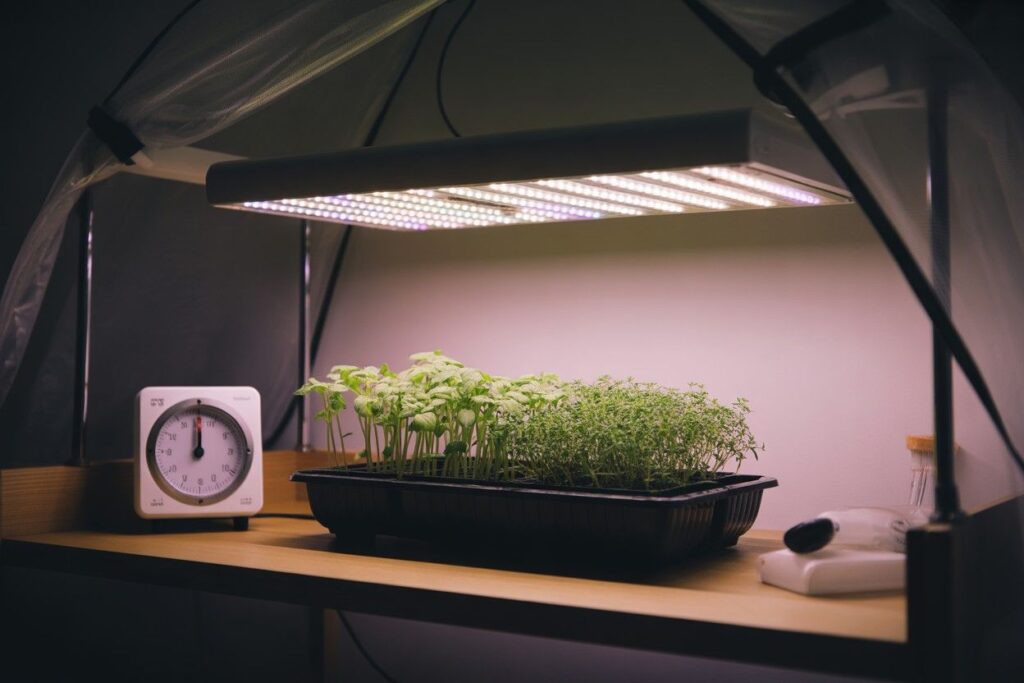
| LED Grow Lights (Full-Spectrum) | Provides artificial sunlight for photosynthesis. | Clip-on or panel styles; timer-integrated for 12-16 hours daily. | $20-50 |
| Seed Trays or Pots (Self-Watering) | Holds soil and seeds; prevents overwatering. | 4-6 inch pots with drainage; recycled yogurt cups work too. | $10-20 |
| Organic Potting Mix | Nutrient-rich base; avoids compaction. | Mix with perlite for aeration; pH 6.0-7.0. | $5-15 |
| Herb Seeds/Starters | Quick-start varieties tolerant to low light. | Choose shade-loving like mint; non-GMO for organic. | $5-10 |
| Humidity Dome or Tray | Maintains moisture during germination. | Clear plastic covers; DIY with wrap. | $5 |
| Fertilizer (Organic Liquid) | Boosts growth in artificial conditions. | Dilute fish emulsion; apply bi-weekly. | $10 |
| Pruning Shears | Keeps plants bushy and healthy. | Small scissors for delicate herbs. | $5 |
Opt for energy-efficient LEDs to keep electricity costs low—modern models use 20-40 watts, equivalent to a desk lamp.
Selecting the Best Herbs for Indoor Low-Light Conditions
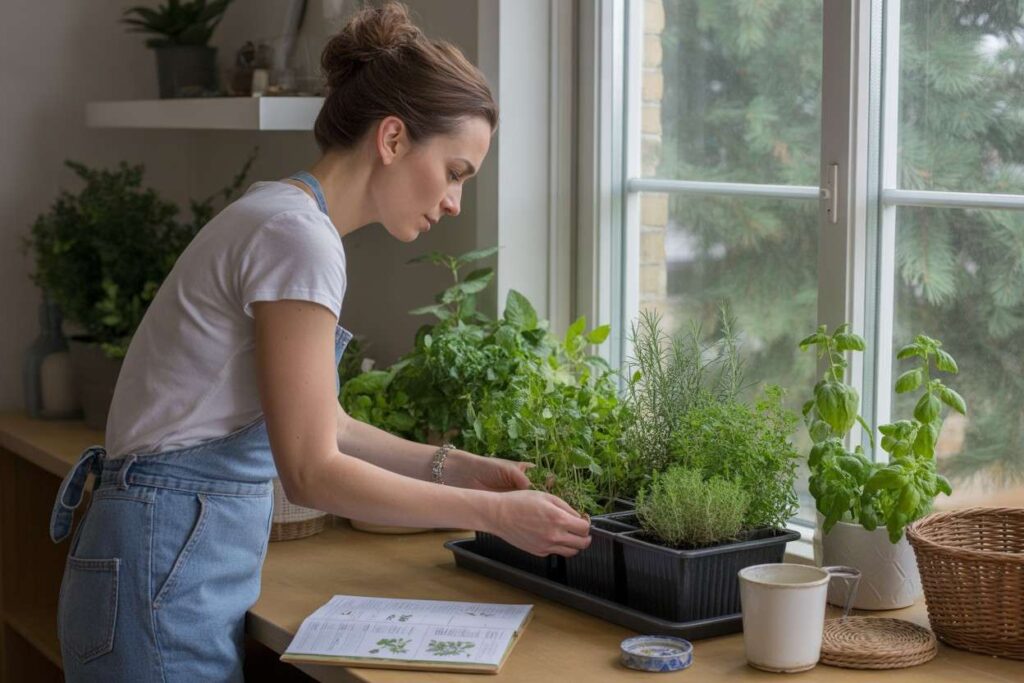
Not all herbs thrive without sun, but these resilient varieties adapt well to artificial light, offering robust flavors and easy care.
Low-Light Champions
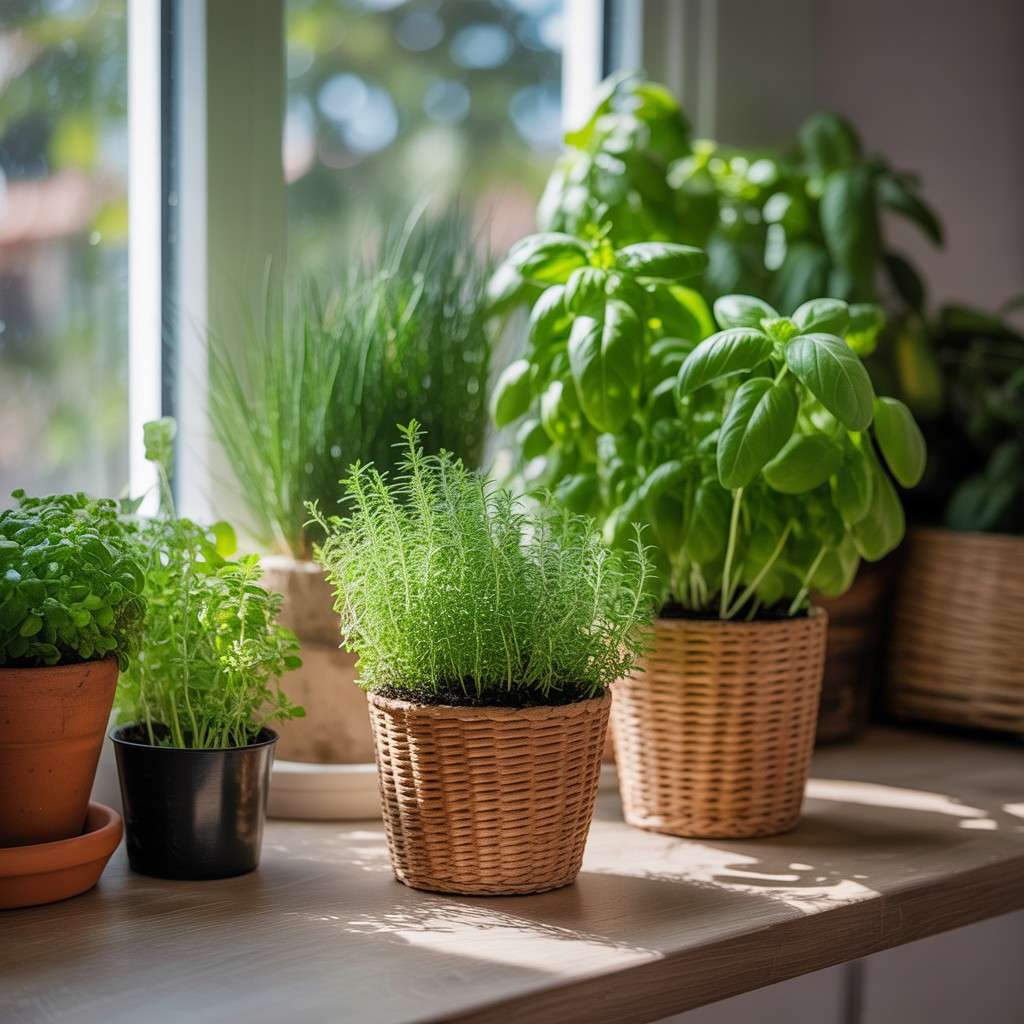
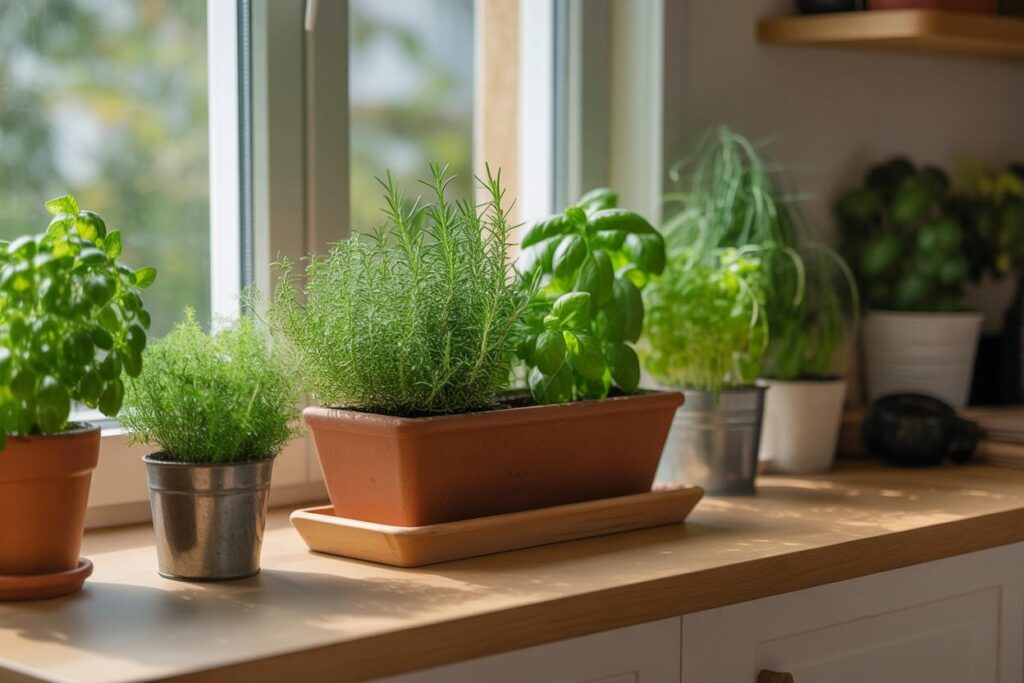
- Mint (Peppermint/Spearmint): Tolerates shade; grows quickly in moist soil. Harvest leaves for teas or salads.
- Chives: Onion-like flavor; compact and forgiving. Snip tops regularly.
- Parsley: Biennial with curly or flat leaves; prefers cooler temps.
- Lemon Balm: Citrus-scented; calms nerves when brewed.
- Oregano: Drought-tolerant once established; Mediterranean vibe.
- Thyme: Woody stems; excellent for seasoning meats.
- Cilantro (Coriander): Fast-growing; seeds for spice.
- Tarragon: Licorice notes; French variety best indoors.
Avoid sun-lovers like basil or rosemary without strong lights—they’ll stretch and weaken. Start with 3-5 varieties to experiment.Source: The Spruce Herb Guide.
Step-by-Step Guide to Setting Up Your Indoor Herb Garden
Follow this beginner-friendly process to get started, ensuring healthy growth from seed to harvest.
Step 1: Prepare Your Growing Medium
- Mix potting soil with 20% perlite or vermiculite for drainage.
- Fill pots, leaving 1 inch from the rim.
- Moisten soil lightly—damp but not soggy.
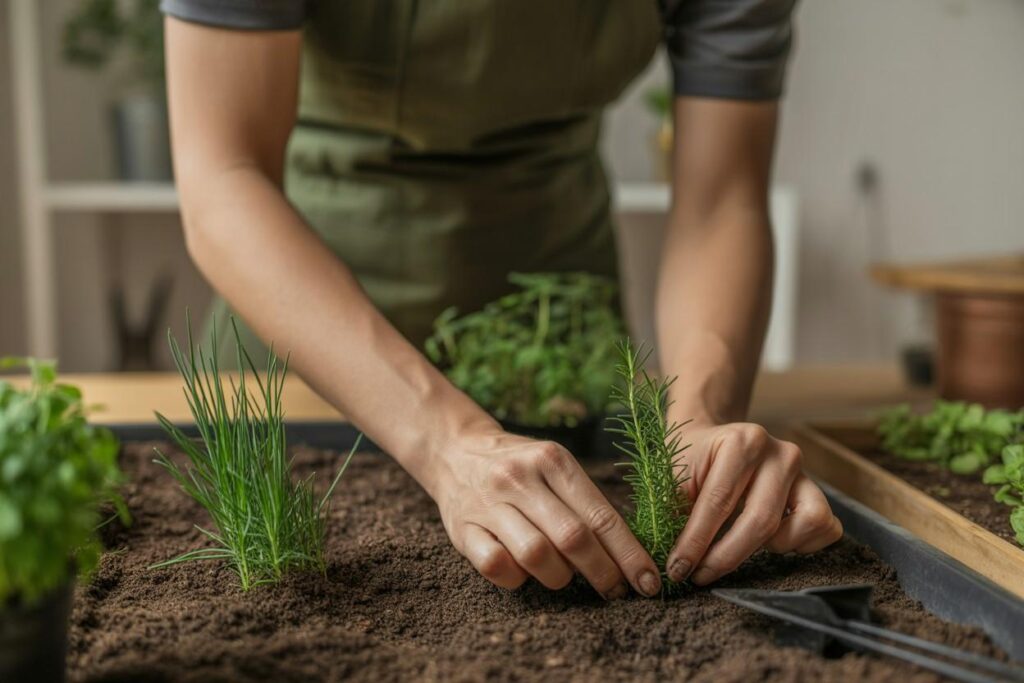
Step 2: Plant Seeds or Starters
- Sow seeds ¼ inch deep; cover lightly.
- For starters, transplant gently, burying to the first leaves.
- Space 4-6 inches apart in trays.
Step 3: Install Grow Lights
- Position 6-12 inches above plants; adjust as they grow.
- Set timer for 12-16 hours daily—mimic natural day cycles.
- Choose 6500K bulbs for vegetative growth
Step 4: Water and Fertilize
- Water when top inch is dry; use room-temp water.
- Fertilize every 2-4 weeks with diluted organic mix.
- Monitor for overwatering—yellow leaves signal issues.
Step 5: Maintain and Prune
- Rotate pots weekly for even growth.
- Prune tips to encourage bushiness; harvest 1/3 at a time.
- Watch for pests; use neem oil for organic control.
In 4-6 weeks, you’ll see sprouts; full harvest in 8-12 weeks for most.
Advanced Techniques for Thriving Low-Light Herbs
Elevate your setup with these 2025 innovations for better yields and efficiency.
Hydroponic Systems
- Soil-free; nutrients in water for faster growth (up to 30%).
- DIY with mason jars or buy compact kits like AeroGarden.
- Ideal for mint and parsley; pH 5.5-6.5.
Smart Tech Integration
- App-controlled lights (e.g., WiFi timers) for automation.
- Soil sensors monitor moisture via Bluetooth.
- Trends: AI apps like PlantSnap identify issues early.
Organic Pest Management
- Prevent aphids with ladybugs or sticky traps.
- Use companion planting—mint repels ants.
- Rotate herbs to break pest cycles.
These methods align with sustainable trends, reducing water use by 90% in hydroponics.
Integrating Herbs into Your Daily Life
Maximize your harvest by incorporating herbs creatively:
- Culinary Uses: Fresh chives in eggs; thyme in soups.
- Health Remedies: Lemon balm tea for relaxation.
- Home Decor: Hanging pots for aesthetic appeal.
- Gifting: Bundle dried herbs for friends.
For small spaces, use vertical racks to combine with other plants Source: Houzz Decor Ideas.
Troubleshooting Common Low-Light Herb Problems
Issues arise, but quick fixes keep your garden healthy.
- Leggy Growth: Increase light intensity or duration.
- Yellow Leaves: Overwatering or nutrient lack; adjust accordingly.
- Slow Growth: Check temperature; boost with fertilizer.
- Pests: Isolate and treat organically.
- Wilting: Underwatering; consistent schedule helps.
Journal observations to track patterns and improvements.
Case Studies and Success Stories
Urban gardeners worldwide succeed in low-light setups. A New York apartment dweller reported harvesting mint weekly using LED panels, cutting grocery costs by 40% . In Seattle, a beginner grew parsley and chives in a basement with hydroponics, yielding enough for family meals. These examples from 2025 forums show consistency and proper lighting yield results.
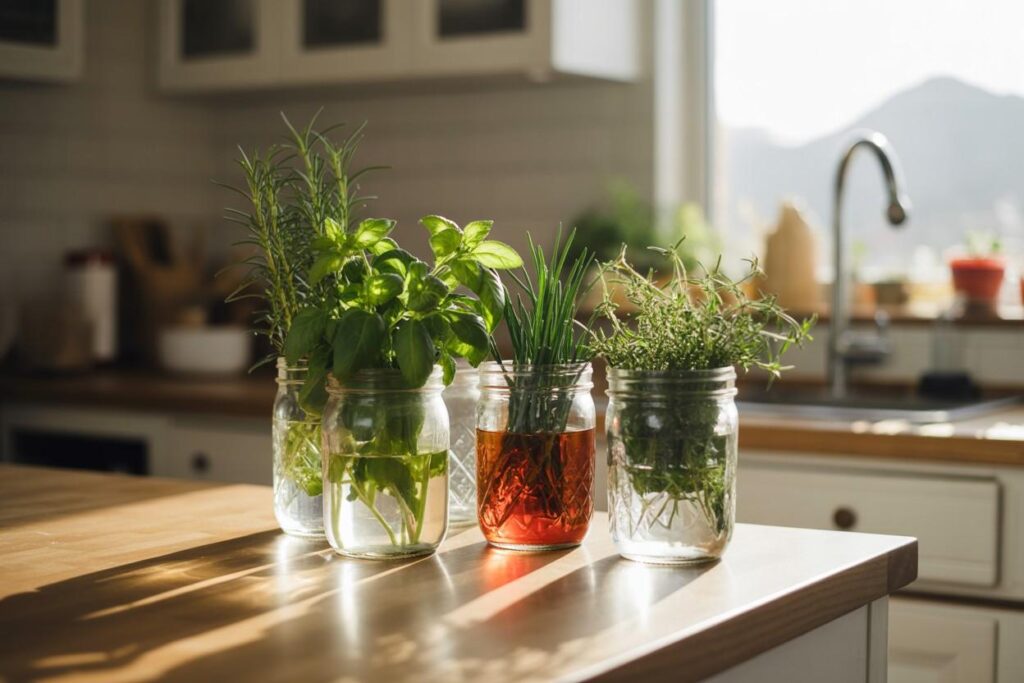
Recommended Herb Varieties for 2025
| Herb | Light Needs | Growth Time | Yield Tips |
|---|---|---|---|
| Mint | Low | 6-8 weeks | Moist soil; prune often. |
| Chives | Low-Med | 4-6 weeks | Snip tops; regrows fast. |
| Parsley | Low | 8-10 weeks | Biennial; harvest outer leaves. |
| Lemon Balm | Low | 6-8 weeks | Shade-tolerant; aromatic. |
| Oregano | Low-Med | 8 weeks | Dry soil; flavorful. |
| Thyme | Low | 8-10 weeks | Woody; drought-resistant. |
Start with mint for quick wins.
FAQs on How to Grow Herbs Indoors Without Sunlight
Can all herbs grow without any sunlight?
No, but shade-tolerant ones like mint thrive with artificial lights.
How much do grow lights cost to run?
About $5-10 monthly for a small setup.
Do I need special soil?
Organic potting mix with drainage works best.
How often to water?
When top soil dries; 2-3 times weekly.
Can I use regular bulbs?
No—grow lights provide the right spectrum.
Conclusion
Mastering how to grow herbs indoors without sunlight empowers beginners to enjoy fresh, organic produce anytime. By selecting tolerant varieties, using efficient lights, and following maintenance tips, you’ll create a sustainable garden in any space. Experiment, observe, and harvest the rewards. For more small-space ideas, check our organic gardening guide. Your indoor herb journey starts now—happy growing!