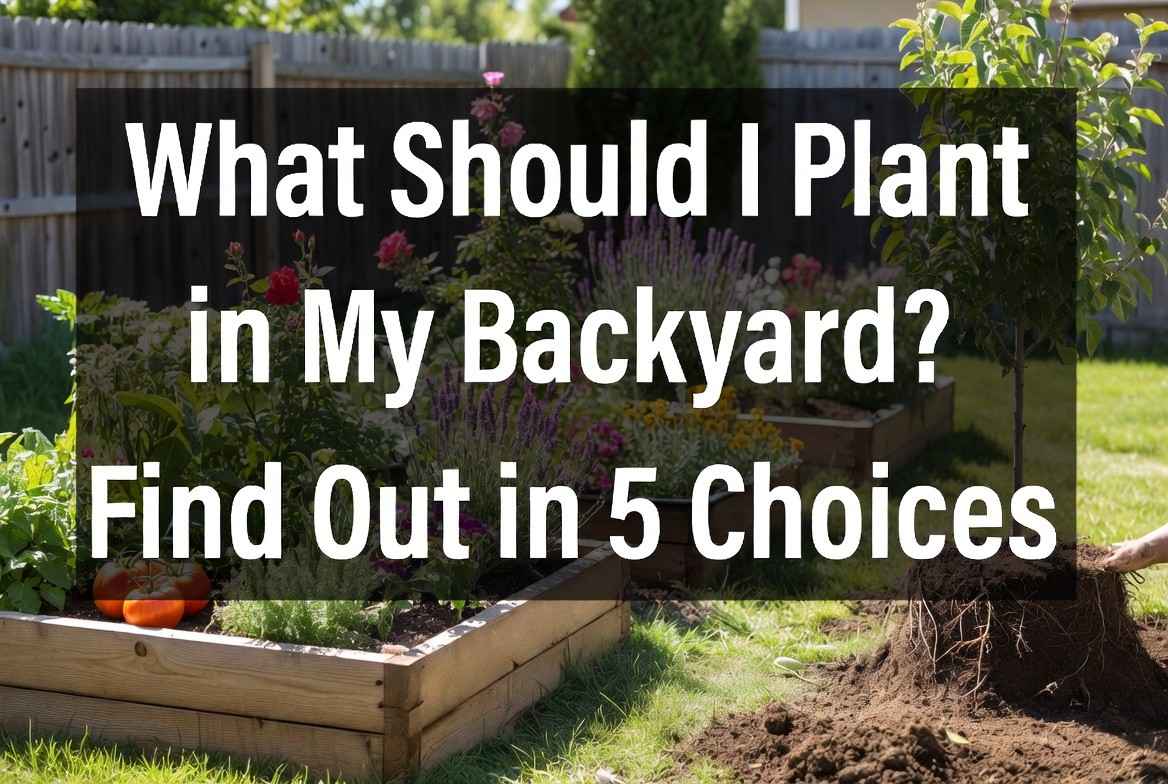
What Should I Plant in My Backyard? Find Out in 5 Choices
Most backyard planting advice is written for someone else’s garden. This one adapts to yours — follow the story and find out exactly what to grow this season.
Every spring, millions of American homeowners stand in their backyards thinking the same thing: I want to grow something. But what? The answer depends on things no generic article can know — how much sun your yard gets, how much space you have, how much time you want to spend, and what you actually want to eat or enjoy.
This guide works differently. Instead of giving you a list of “best vegetables to grow,” it puts you in the story, lets you make the decisions, and gives you a planting plan that fits your actual situation. Follow the path that matches your yard — five choices, five minutes, one clear answer.
What every backyard gardener needs to know before planting anything
The single most common mistake first-time backyard gardeners make is planting before they understand their space. They buy tomatoes because they like tomatoes, plant them wherever there’s room, and wonder why they produced nothing. The plant wasn’t wrong. The location was.
Before you put anything in the ground, three things matter more than plant selection: sunlight, soil, and timing. Get those three right and most vegetables will grow. Get them wrong and even the easiest plants will struggle.
Sunlight — the factor most people underestimate
Most vegetables need 6–8 hours of direct sunlight daily to produce well. “Full sun” doesn’t mean sun somewhere in the yard — it means sun on the specific spot where you’re planting. Shade from a fence, a tree, or even a neighboring house can reduce that to 3–4 hours, which rules out most fruiting vegetables but opens the door to leafy greens and herbs.
Spend one day watching how sun moves across your planting area before you commit. A morning walk-through at 9am, noon, and 3pm tells you more than any app or map.
| Plant | Sun needed | Hours/day | Notes |
|---|---|---|---|
| Tomatoes | Full sun | 6–8 hrs | Fewer hours = fewer fruit |
| Peppers | Full sun | 6–8 hrs | Love heat — south-facing spots ideal |
| Zucchini | Full sun | 6+ hrs | Sprawls — needs at least 4 sq ft |
| Cucumbers | Full sun | 6–8 hrs | Trellis saves space |
| Beans | Full sun | 6+ hrs | Direct sow — no transplanting |
| Lettuce | Part shade | 3–5 hrs | Prefers cooler spots — bolts in heat |
| Spinach | Part shade | 3–5 hrs | Spring and fall crop |
| Kale | Part shade | 4–6 hrs | Tolerates frost — very hardy |
| Basil | Full sun | 6+ hrs | Keep near kitchen for easy harvesting |
| Mint | Shade ok | 3+ hrs | Grows aggressively — contain in a pot |
| Strawberries | Full sun | 6–8 hrs | Perennial — plant once, harvest for years |
| Carrots | Part shade | 4–6 hrs | Need 12″+ deep loose soil |
Space — you need less than you think, but use it well
A 4×8 foot raised bed — one of the most common backyard setups — can produce more food than most families expect. The key is vertical growing. Cucumbers, beans, and even some tomato varieties grow upward when given a trellis, freeing ground space for lower-growing plants beneath them.
If all you have is a patio or balcony, containers work for more plants than most people realize. Tomatoes, peppers, lettuce, herbs, and even compact cucumber varieties all grow well in 5-gallon or larger containers — as long as they get adequate sun and consistent watering.
Small space (under 20 sq ft)
Focus on high-yield, vertical, or fast-turnover crops — lettuce, herbs, cherry tomatoes on a trellis, bush beans. One 4×4 bed managed well outproduces a neglected larger garden.
Medium space (20–100 sq ft)
You can grow a full kitchen garden. Prioritize what your household actually eats. One zucchini plant, two tomato plants, a few herbs, and a row of lettuce is a realistic and productive combination.
Containers only
Use the largest containers you can — bigger pots hold more moisture and allow deeper root growth. A 15-gallon container grows a full tomato plant. A window box works for herbs and lettuce.
Timing — the most overlooked factor
Planting at the wrong time is the most avoidable mistake in backyard gardening. Most beginner gardeners plant too early — especially in the Midwest and Northeast where late frost can kill warm-season transplants well into May. The last frost date for your specific ZIP code is the single most useful piece of information for timing your garden, and it varies significantly even within the same state.
Use the Frost Date Calculator to find your exact dates, then use the Planting Date Calculator to work out when to start seeds indoors and when to transplant. Both are free and take about 60 seconds to use.
Questions people ask before planting their backyard
Zucchini and bush beans are the most reliably productive vegetables for beginner gardeners with full sun. Both grow from direct-sown seed, need minimal maintenance, and produce more than most families can use. For shadier spots, lettuce and spinach are the easiest starting points — they grow fast, can be harvested repeatedly, and tolerate cooler temperatures.
Most fruiting vegetables — tomatoes, peppers, cucumbers, zucchini — need 6–8 hours of direct sun daily. Leafy greens, herbs, and root vegetables tolerate 3–5 hours and sometimes prefer partial shade, especially in hot summers. If your yard gets less than 3 hours of direct sun, focus on shade-tolerant herbs like mint, parsley, and chives rather than trying to force vegetables that won’t produce.
Yes, but your options narrow significantly. Leafy greens — lettuce, spinach, arugula, kale, Swiss chard — all produce reasonably well in 3–5 hours of sun. Herbs like parsley, cilantro, and mint also handle shade well. Don’t try tomatoes or peppers in shade — they’ll survive but won’t produce fruit worth harvesting. If shade is from trees, removing low branches to let in more dappled light can make a meaningful difference.
It depends entirely on where you live. The last frost date for your ZIP code determines when it’s safe to plant warm-season crops outside. Cool-season crops like peas, lettuce, and spinach can go out 4–6 weeks before that date. Use the Frost Date Calculator to find your exact window, and the Planting Date Calculator for crop-specific timing.
A 4×8 foot raised bed (32 square feet) is a practical starting size for most beginners — large enough to grow a meaningful variety of crops, small enough to maintain without becoming overwhelming. You can grow a kitchen garden that supplements your meals year-round in that space. If you’re starting with containers, plan on at least a 5-gallon pot per tomato or pepper plant, and smaller containers for herbs and lettuce.
Start with three things: one fast crop (radishes or lettuce — ready in 30 days, builds confidence), one staple crop (tomatoes or zucchini — what you’ll actually cook with), and one herb (basil or mint — low maintenance, instant reward). Three plants from three categories gives you early wins, something to watch grow all season, and something to use in the kitchen immediately.

![What Gardening Tools Do You Actually Need? [Take the Quiz]](https://twcgardening.com/wp-content/uploads/2026/04/what-tool1-150x150.jpg "What Should I Plant in My Backyard? Find Out in 5 Choices")